
 See what changes
01Why colour change is the most common wardrobe wrap
The structure of a fitted wardrobe is usually fine for decades. What dates is the finish: strong orange or red wood tones, high gloss, or a pattern from another era. Changing the colour alone can make the whole bedroom feel larger, lighter and more modern, at far less cost and disruption than replacement.
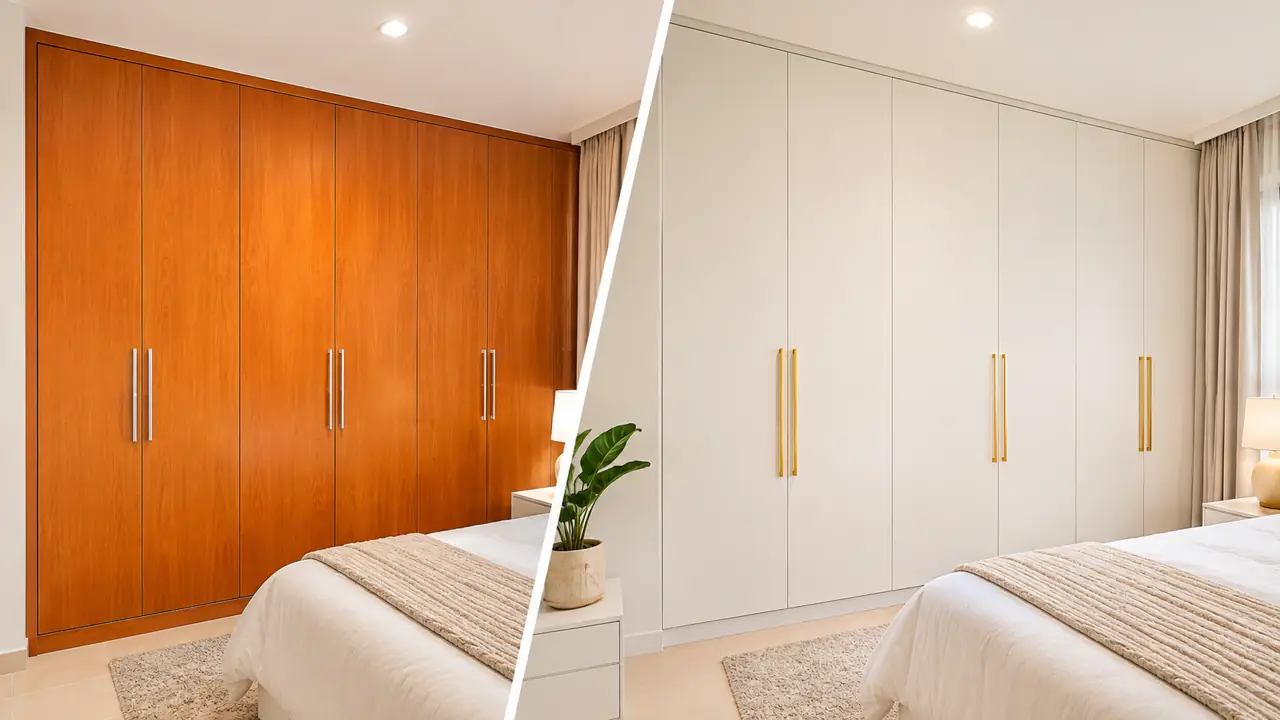
02Choosing the new colour
| Direction | Effect | Think about |
|---|---|---|
| Soft white or off-white | Bright, clean, spacious | Shows marks more, so choose a matte or lightly textured finish |
| Warm neutral (greige, taupe) | Calm, modern, forgiving | Pairs well with wood floors and warm lighting |
| Light oak-look | Natural, airy | Match the grain direction across all doors |
| Walnut-look | Rich and premium | Darker tones suit larger, brighter rooms |
| Two-tone | Designed, layered | Wood on the outer doors and a neutral in the centre |
Colour looks different on a screen, in print and in your own light, so always view physical samples in the bedroom, in daylight and evening light. See how to choose an interior wrap finish and matte versus gloss.
03Handles and details
New handles change the character as much as the film. Slim brass or black pulls feel modern, while old silver bars can look dated against a fresh colour. Hardware is a separate item, so agree in writing who removes and refits handles and hinges, and whether new ones are supplied by you. Edges, door gaps and the top and sides of the wardrobe also need attention so no old colour shows.
04Is your wardrobe suitable?
- Usually suitable: laminate, melamine, painted or smooth veneer doors that are solid, flat, dry and well bonded.
- Check first: swollen or lifting panels, peeling surfaces, damp walls behind the wardrobe, doors that do not hang straight.
- Ask: sliding doors need working runners, and mirrors or glass need a different approach.
Our guide to surfaces that should not be wrapped lists the honest limits.
05What the project involves
- Send photos of the wardrobe and the door edges.
- Choose and approve a sample against your walls and floor.
- Empty the wardrobe and protect the room, following our preparation checklist.
- Surfaces are cleaned, degreased and prepared.
- Film is fitted door by door with careful edge work.
- Inspect with the installer and agree aftercare.
06Rentals and resale
A neutral colour is a common choice before listing or re-letting a property because it helps rooms photograph and feel fresher. Tenants should check their lease and get permission first, and landlords should confirm what the building allows. See wrapping a rental property in Dubai.
07Care afterwards
Wipe with a soft cloth and mild cleaner, avoid abrasive pads and solvents, and keep strong direct sun and heat away from edges where possible. Durability depends on preparation, the film and use, so we do not promise a fixed number of years. See wrapping warranties explained.
08Frequently asked questions
Can an orange wood wardrobe be wrapped in white?
Will white show marks and fingerprints?
Do I need new handles?
Can I wrap only the outside of the wardrobe?
Can a wrapped wardrobe be changed back?
This guide is general information. Final suitability for your own surfaces is confirmed after inspection.